Acropolis
We met our guide for the day at a trendy little area full of restaurants and souvenir shops next to the Acropolis museum.
Our guide was a very proper looking Mary Poppins sort of French lady named Maria. Her umbrella was her marker for us to keep track of her among the throngs of visitors ascending the mountain.
The Acropolis is the most iconic landmark in Athens, home to the Parthenon, Erechtheion, and other ancient structures. It's a UNESCO World Heritage Site and a symbol of ancient Greek civilization.
The Acropolis has been inhabited since prehistoric times, with evidence of human activity dating back to the Neolithic period.
During the late Bronze Age, the Mycenaeans built a massive palace on the Acropolis, surrounded by a Cyclopean wall.
The most famous structures, including the Parthenon, were built during the 5th century BCE under the rule of Pericles. The Parthenon standing today is actually the third one built on that spot.
It was quite a walk up the mountain. Fortunately we took many breaks where Maria provided us all sorts of information and history. The sun was also out and intruded on us as a rather unwelcome member of our party. Joe however was not able to join us. Maria sent him ahead to wait for us at the museum where he promptly found the cafe.
We walked above the amphitheater at the Acropolis. The seating for the Odeon of Herodes Atticus theater has been restored and is currently a popular entertainment venue and hosts many famous performers.
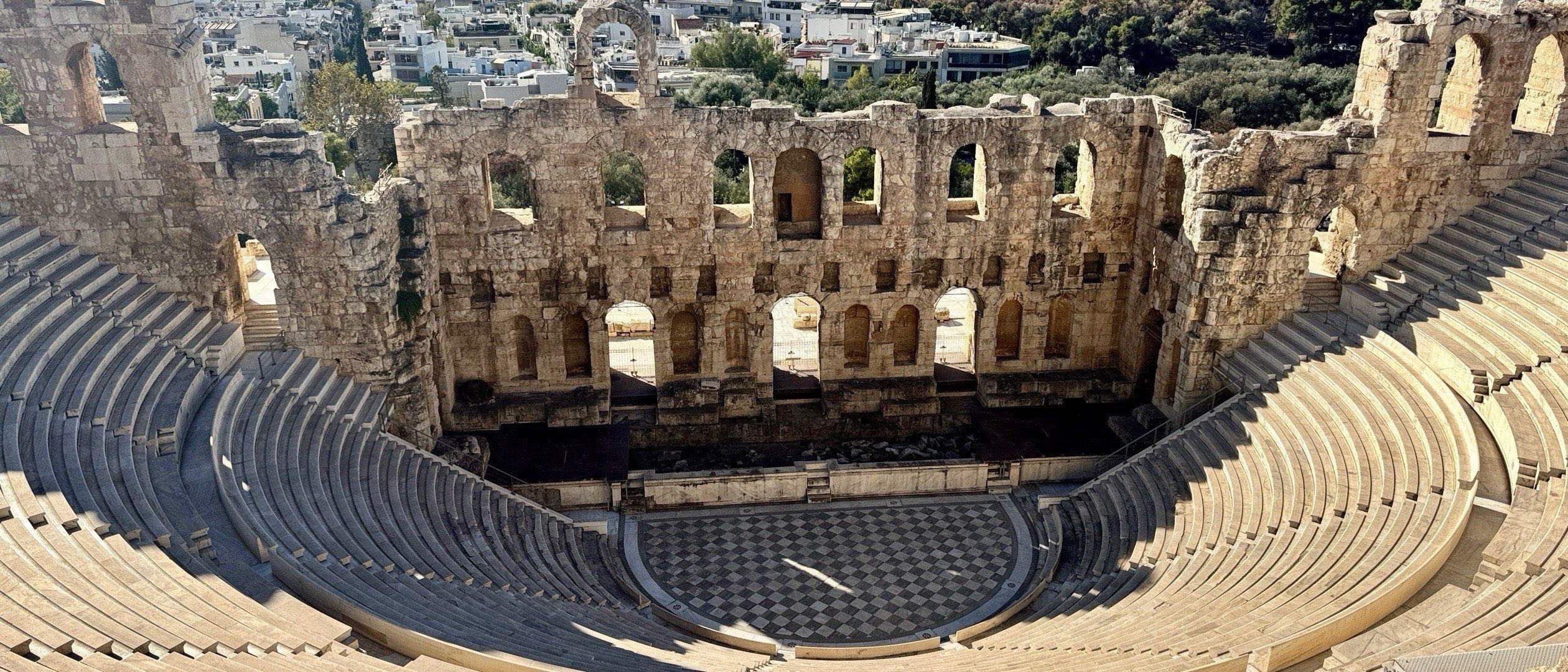
We reached the Propylaea, which was the grand entrance to the Acropolis. It was designed to impress visitors with its monumental architecture.
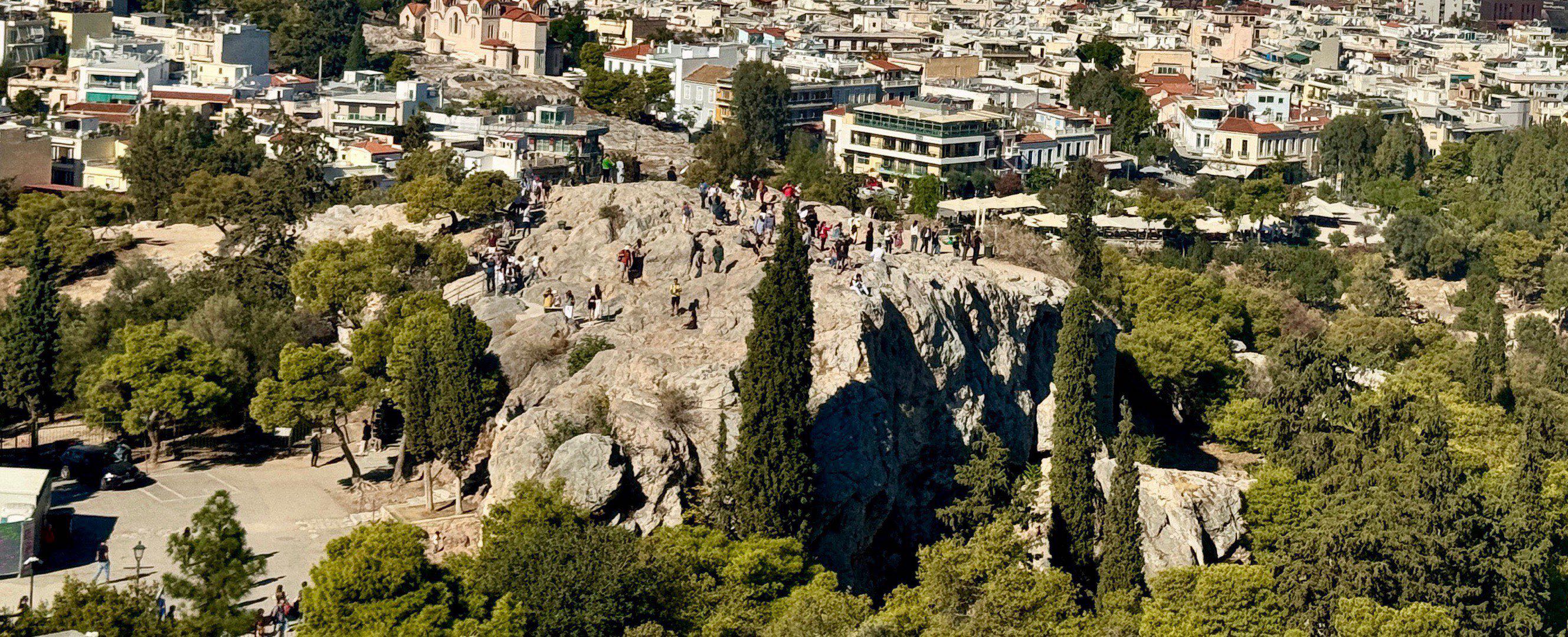
From here we had a good view of the Areopagus, most commonly knows as Mars Hill. It is a rocky outcrop located on the northwest slope of the Acropolis.
The name comes from Ares, the Greek god of war, and "pagos" meaning "hill". In Latin, it's called "Mars Hill" after the Roman god Mars.
In ancient times, the Areopagus served as the high court of Athens, where serious cases like murder and religious matters were tried.
The Apostle Paul delivered his famous sermon here, as recorded in the Book of Acts. He spoke to the Athenians about the "unknown god" they worshiped.
Today, Mars Hill is a popular spot for tourists to enjoy panoramic views of the city and to watch the Sunset.
I watched the sunset from the top of our apartment. Looking back towards the Acropolis I could also see the large crowd viewing it from Mars Hill.
As we ascended the rest of the way to the top of the mountain, we first passed the Temple of Athena Nike. It’s a smaller temple, dedicated to the goddess Athena as the bringer of victory.
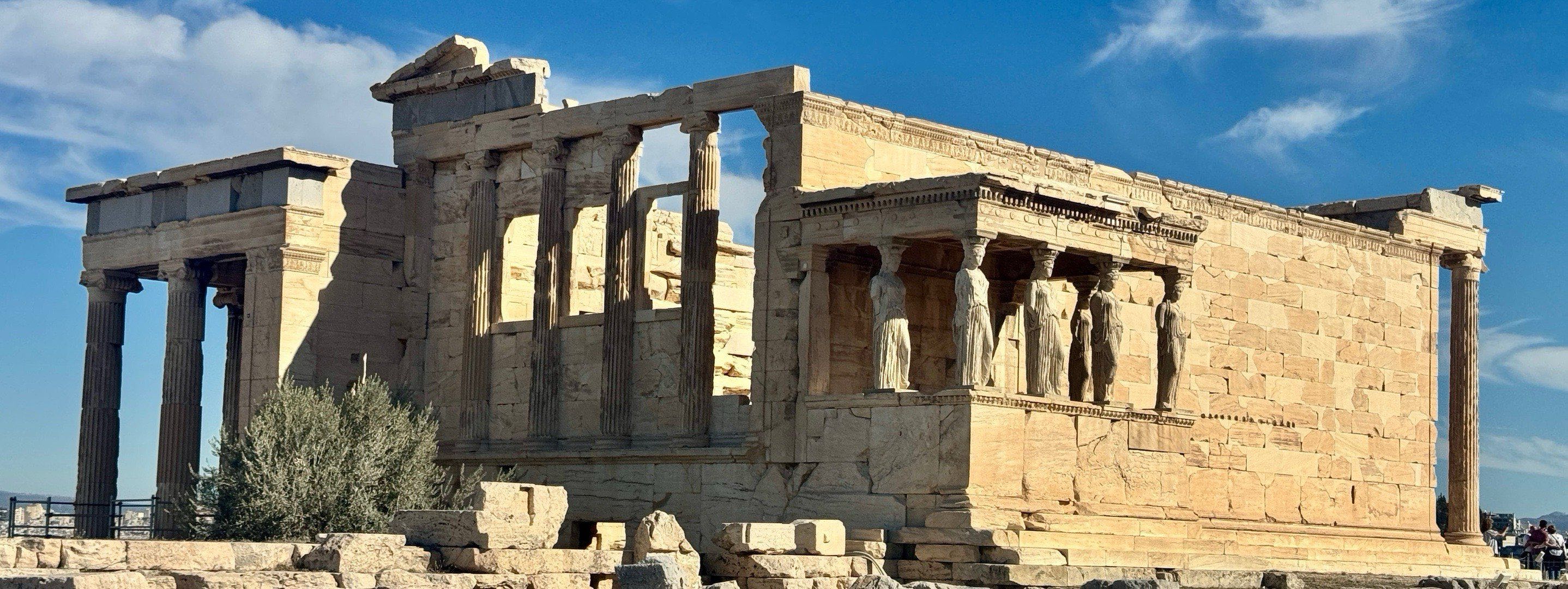
We then moved on to the much larger and more significant Erechtheio, dedicated to both Athena and Poseidon. It is known for its Caryatid Porch featuring six columns sculpted as female figures.
The Acropolis and Greek mythology are deeply intertwined, as many myths and legends are tied to this sacred site.
The most famous myth associated with the Acropolis is the contest between Athena, the goddess of wisdom, and Poseidon, the god of the sea. The winner of the contest would become the patron deity of the city. To win the favor of the citizens, Poseidon struck his trident on the Acropolis, creating a saltwater spring. Athena, in turn, offered an olive tree, symbolizing peace and prosperity. The Athenians chose Athena's gift, and the city was named after her.
The Erechtheion, where we were standing, was built on the spot where Athena and Poseidon's contest took place. It also contains an olive tree, said to be descended from the original tree gifted by Athena. There is a hole in the roof where Zeus had sent a thunderbolt to kill Erechtheus, the man whose name had been given to the temple.
Maria said these markers, still visible today, stand as proof to the reign of the Gods and grant viability to their stories.
While we all giggled at that comment, it had me thinking. We don’t even have that much “proof” to verify any of Jesus’s miracles, yet people completely believe those stories.
Next we moved on to the main attraction of the mountain. The Parthenon is dedicated to the goddess Athena and is considered the pinnacle of ancient Greek architecture. It's renowned for its Doric columns and intricate sculptures.
The Parthenon was built in honor of Athena Parthenos (Athena the Virgin). It housed a massive statue of Athena made of gold and ivory, created by the sculptor Phidias. The Parthenon's sculptures and friezes depict various myths, including the birth of Athena and the battles between the gods and giants.
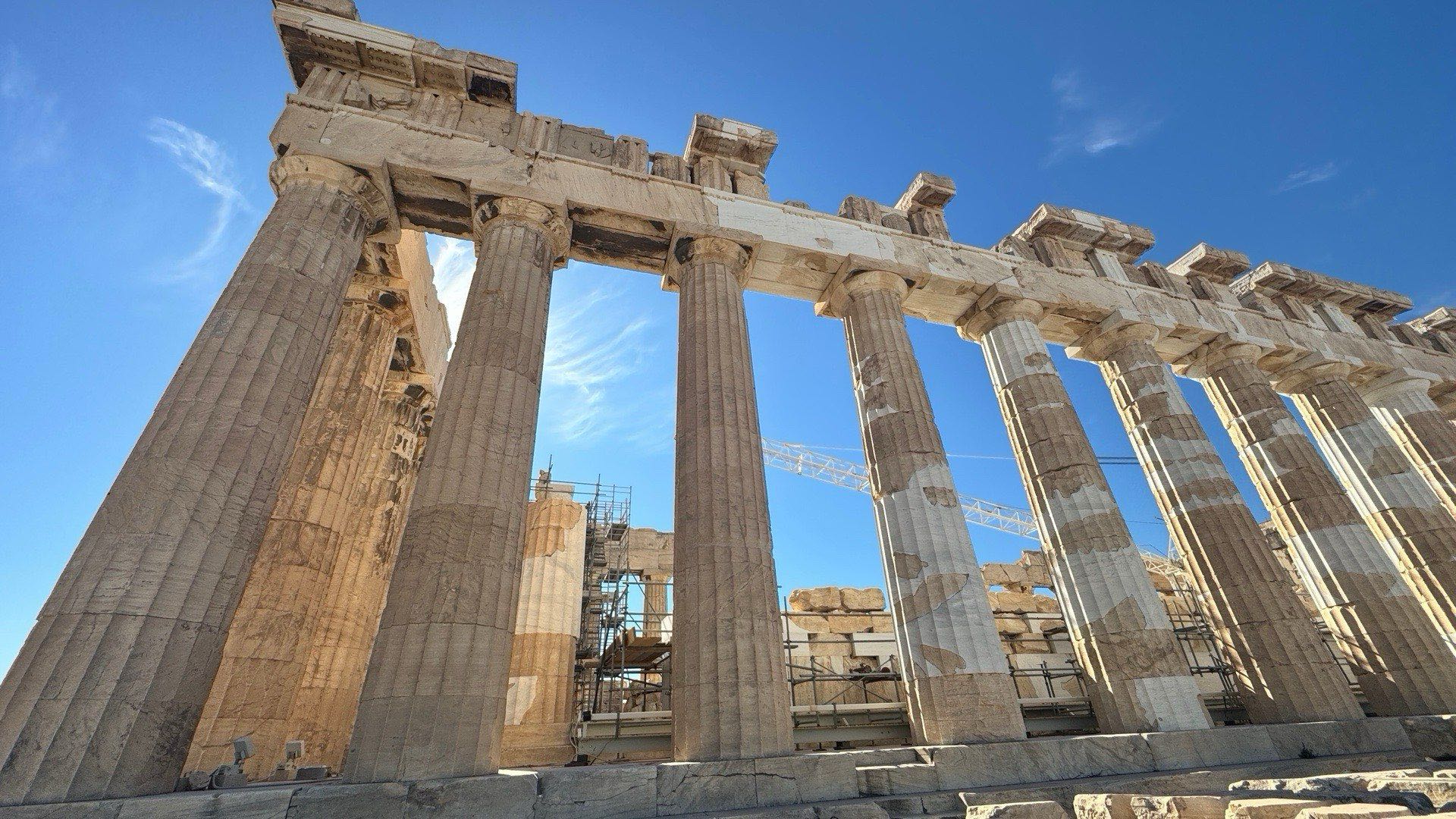
The Acropolis has endured numerous invasions, including the Persian Wars and the Venetian bombardment in 1687, which caused significant damage.
Over the centuries, the Acropolis has been converted into a Christian church, and later an Ottoman mosque.
At the end of the tour Maria gave us time to walk around the mountain top. Finding out we are from America she volunteered her opinion on Trump. She was quick and to the point; nobody likes him and people are amazed that so many Americans are voting for him.
We descended the mountain and went to the Acropolis museum. There she began a personalized tour of the multistory building. By this time we were completely worn out and one by one we dropped out and joined Joe in the cafeteria.
Once we were all together, we went back out to our starting point for lunch and started looking for the buffet…
…oh yeah, wait. I mean, a cafe.


Comments
Post a Comment