The Maze of Istanbul - Larry
Since Trevor and Bryan had already experienced the major sights of Istanbul a few years ago, the four of us (Joe, Alan, John, and Larry) set off to explore “The Byzantine Heritage of Istanbul” (the name of our excursion). This is a huge city, currently hosting around 17.5 million people! (Including the recent influx of refugees)
The maze of Istanbul is divided into two geographical areas by a natural strait opening to the Black Sea, with its western half attached to the European Continent and its eastern side forming the doorway to the mainland of Türkiye (Turkey). Its history is also a labyrinth of twists and turns reflected in the many names this intriguing city has held: Lygos, Byzantium, New Rome, Constantinople, Stamboul, and Istanbul.
Our tour began with a short bus ride through heavy traffic to the heart of the historical sites we visited. Our long walking tour quickly took a toll on Joe, who had developed a nasty cold and needed to sit out the remainder of the excursion. Through texts, calls, and mental telepathy(!), he managed to stay in proximity of our group until rejoining us on the last leg to the Bazaar. Trevor and Bryan even joined Joe (and us) during their hop-on-hop-off bus tour! Yay!!
Our first stop was at the site of the ancient Hippodrome (a huge track built for chariot racing—now a pedestrian park) where monuments still stand from the Roman period including the Obelisk of Thutmose III (brought from Egypt), the bronze Serpent Column (moved from the Temple of Apollo at Delphi), and the Walled Obelisk (originally covered with bronze plaques which were later looted during the Fourth Crusade). Over the centuries, much of the Hippodrome was dismantled and repurposed into materials for various other nearby structures, including the Hagia Sophia.
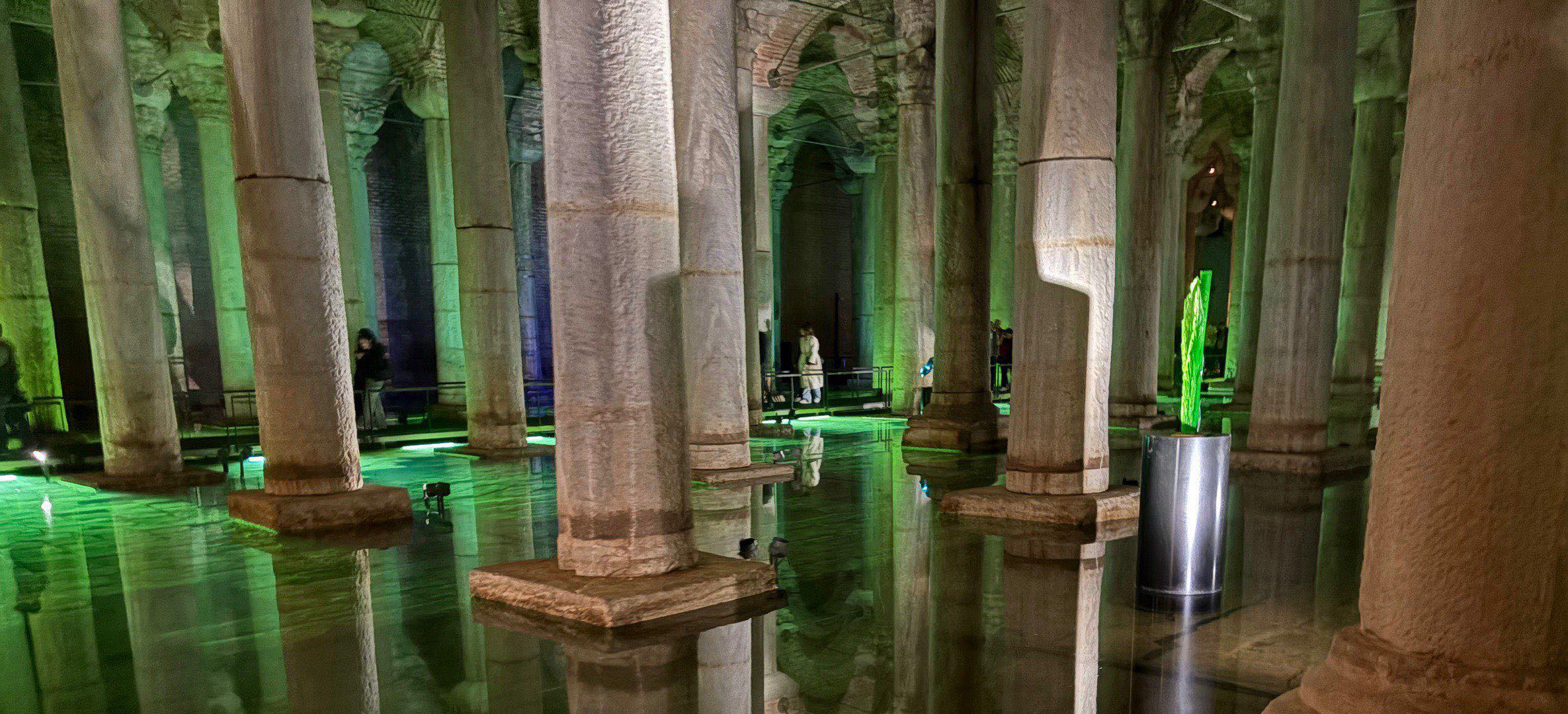
We proceeded then to descend a maze of stairways into the ancient Basilica Cistern, built in the AD 500s by the Romans in order to store water in times of crisis. Held up by 336 marble and granite columns brought in from various parts of the empire (more repurposing!), this imposing underground structure contained up to 2,800,000 cubic feet of water. Restored several times throughout the centuries, the Cistern is now open only as a historical site. This ancient structure was featured in the 1963 James Bond film, “From Russia with Love,” in which it is fictitiously located under the Russian Consulate!
Our next stop brought us through another series of stone steps and ramps into the upper gallery of the Hagia Sophia (meaning “Holy Wisdom”) Grand Mosque. Completed in AD 537, it served as a Greek Orthodox Church until the fall of Constantinople in 1453, when it was converted into a mosque.
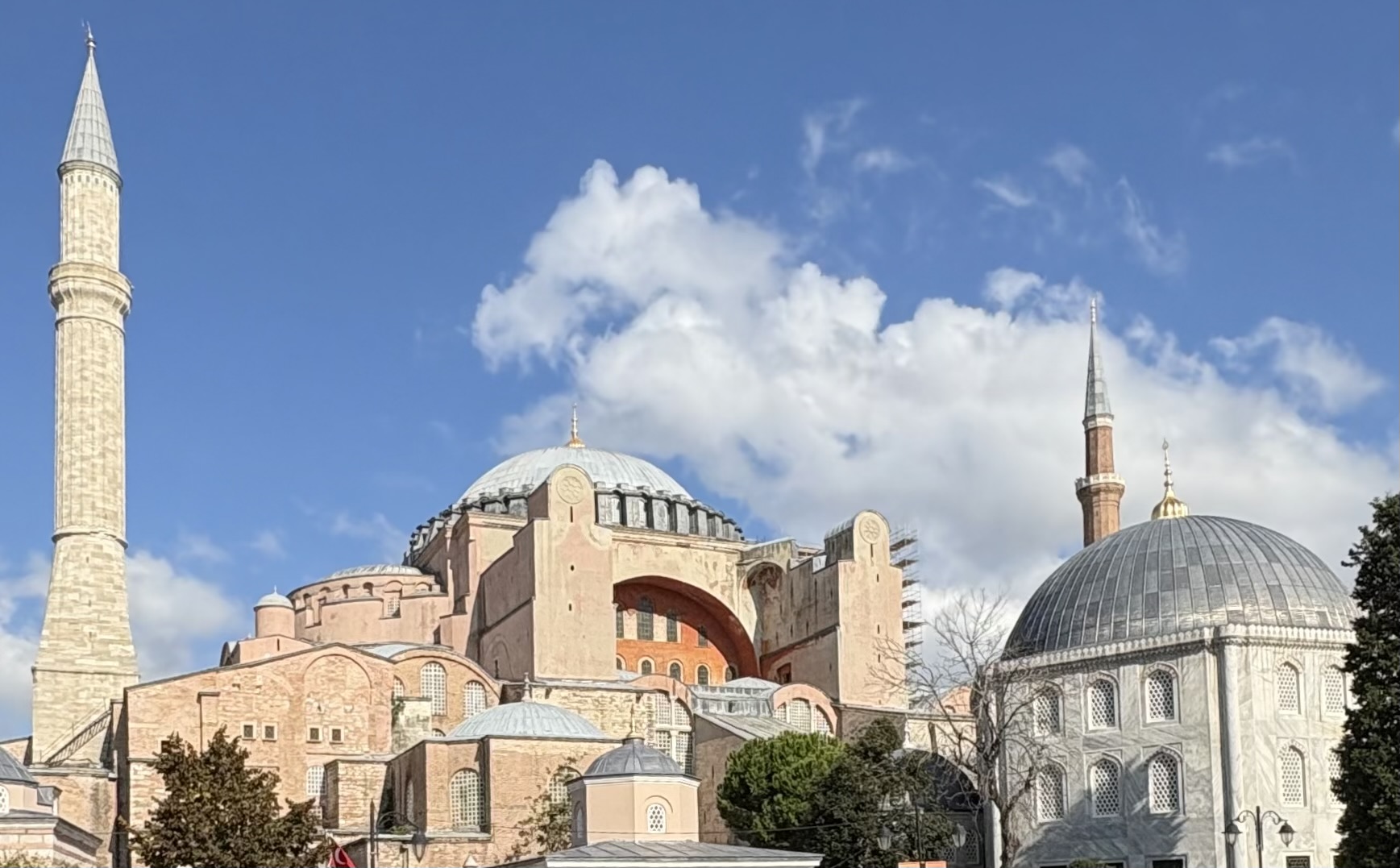
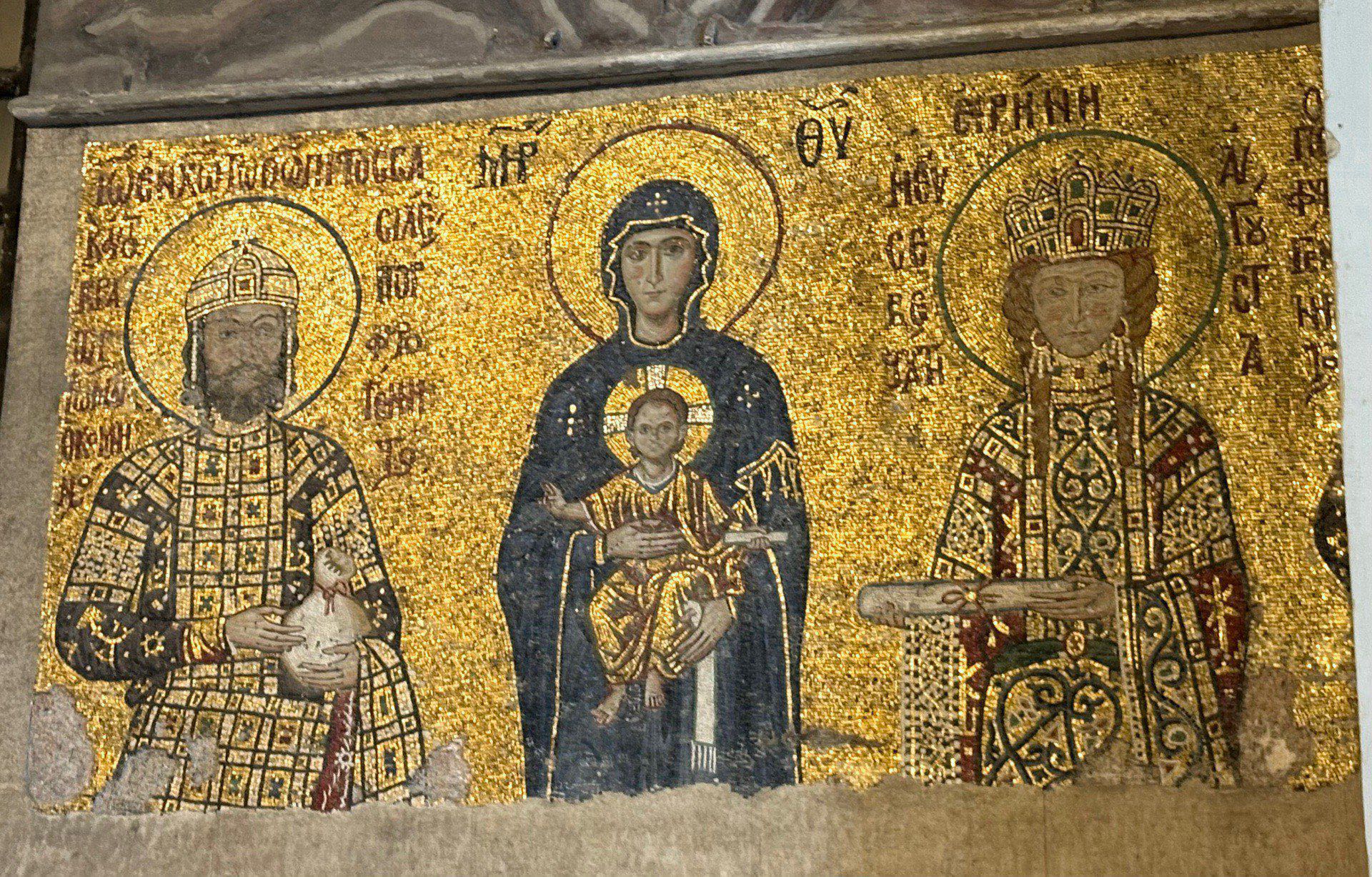
In 1935, the entire site became a museum until 2020, when once again the main floor became restricted to an active place of worship (for Muslim men), with the upper gallery opened to tourists (and female religious observers). This historical usage is evident in the corners of the domed ceilings where the painted plaster (that was installed by devout Muslims to cover the ancient Christian mosaics) has been removed to reveal beautiful icon-like images. After navigating back through the many stairs and ramps, we emerged again into the sunny day.
Our walk continued toward the historic Bazaar, another maze of shops and vendors in which we could easily have become lost; so we decided to forego that experience, and happily returned to the ship, just in time for departure—on our way to Mykonos.


Get ready for nude Mykonos🏖️🏖️
ReplyDelete